Home>Production & Technology>Metronome>How To Practice Guitar To A Metronome

Metronome
How To Practice Guitar To A Metronome
Modified: January 22, 2024
Learn how to effectively practice guitar with a metronome for improved rhythm and timing. Discover the benefits and techniques to enhance your playing.
(Many of the links in this article redirect to a specific reviewed product. Your purchase of these products through affiliate links helps to generate commission for AudioLover.com, at no extra cost. Learn more)
Table of Contents
- Introduction
- Benefits of Practicing with a Metronome
- Setting Up Your Metronome
- Basic Exercises for Rhythmic Accuracy
- Applying the Metronome to Scale Practice
- Incorporating the Metronome into Chord Progressions
- Developing Speed and Precision with the Metronome
- Practicing Different Time Signatures with the Metronome
- Advanced Techniques for Musicality with the Metronome
- Conclusion
Introduction
When it comes to practicing the guitar, one of the most effective tools you can have in your arsenal is a metronome. No matter what level of playing you’re at, incorporating a metronome into your practice routine can greatly enhance your musicality and improve your overall playing skills.
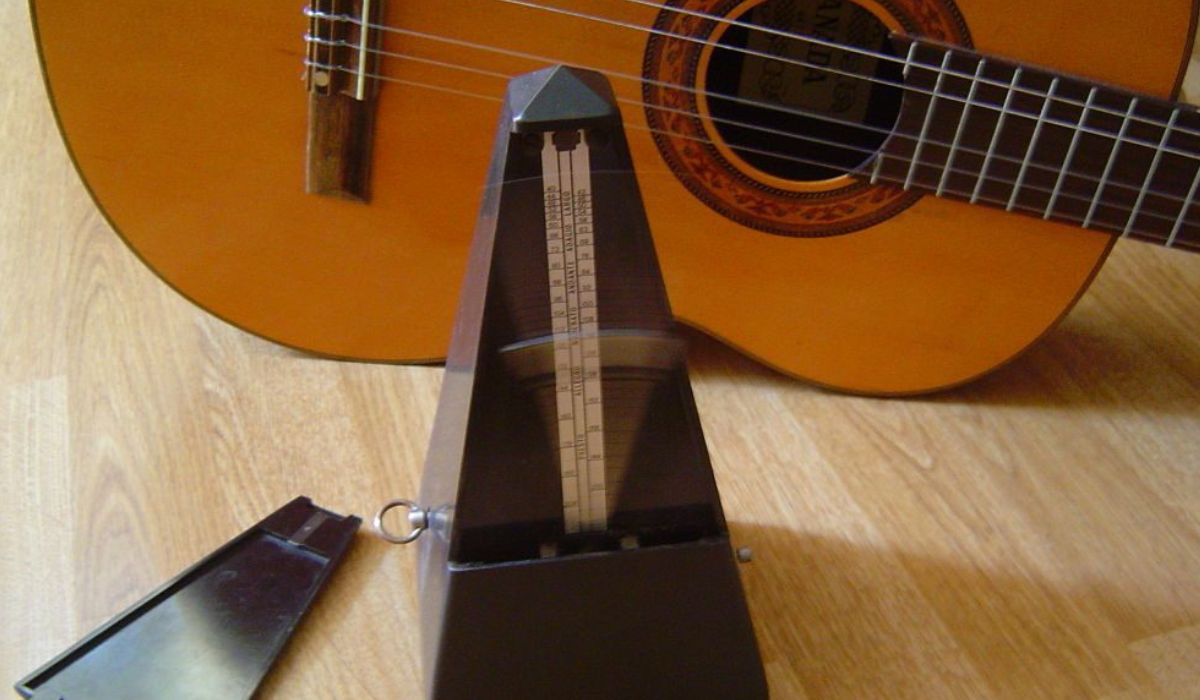
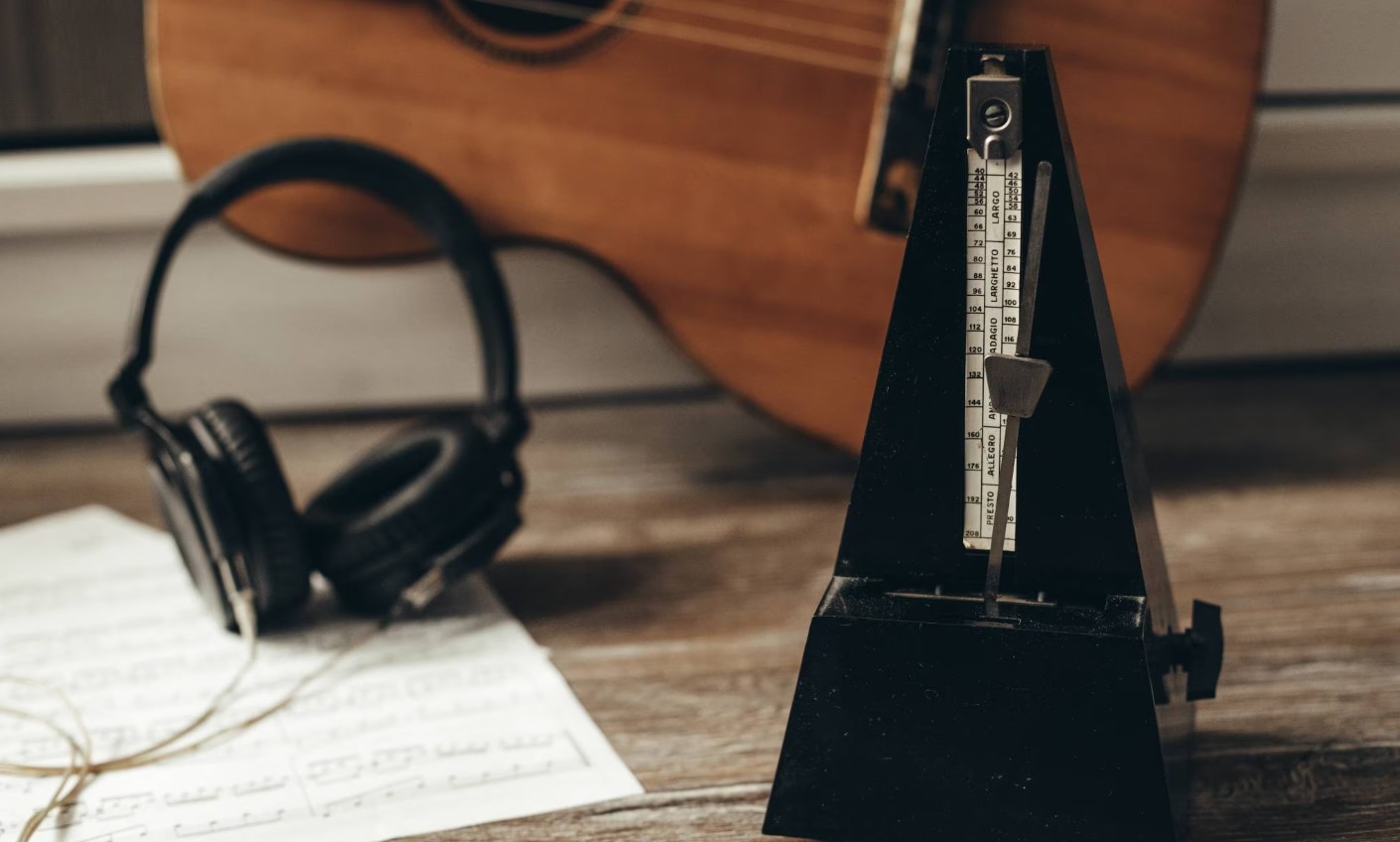
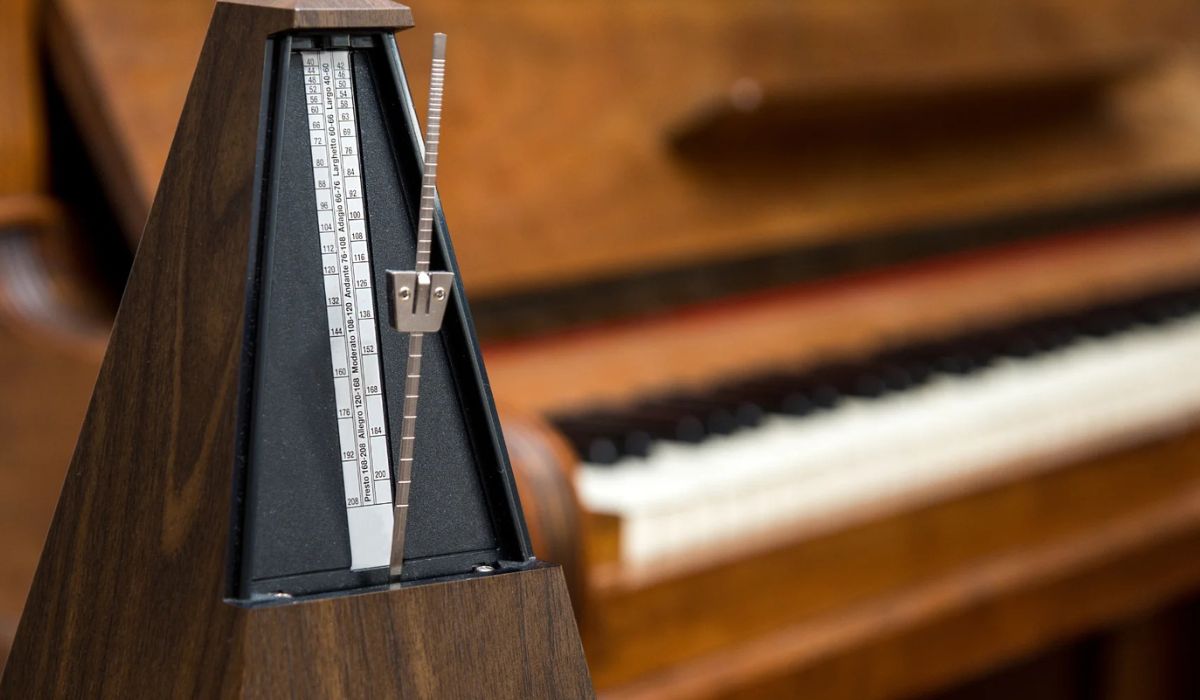
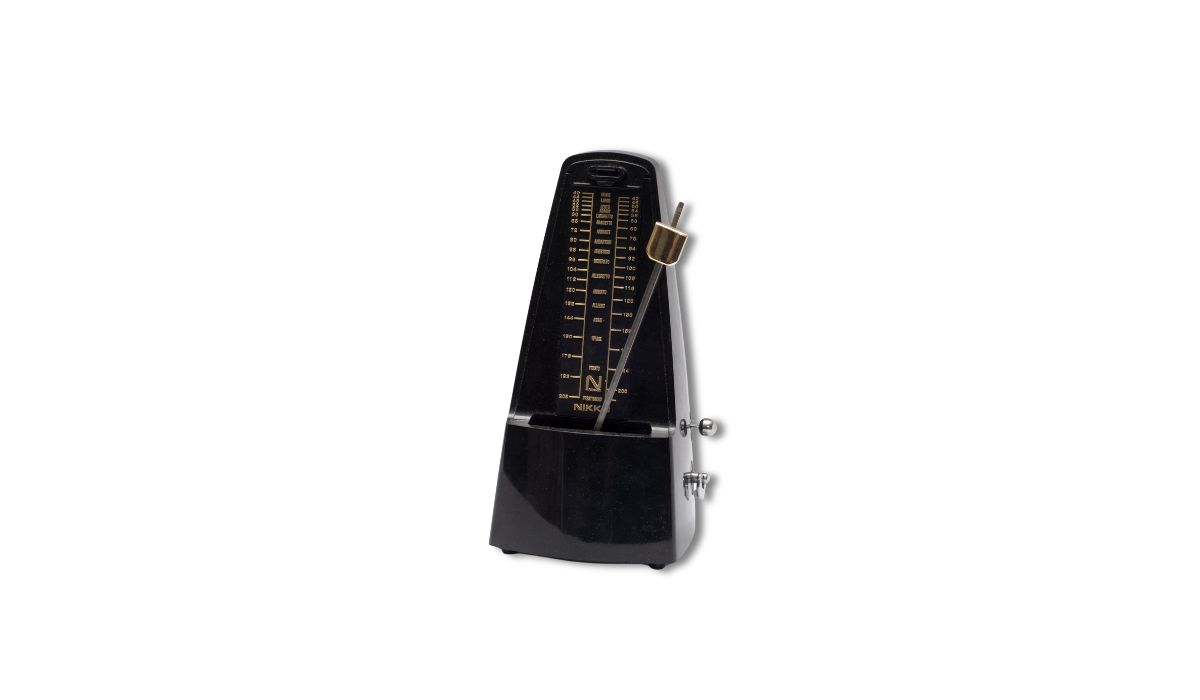
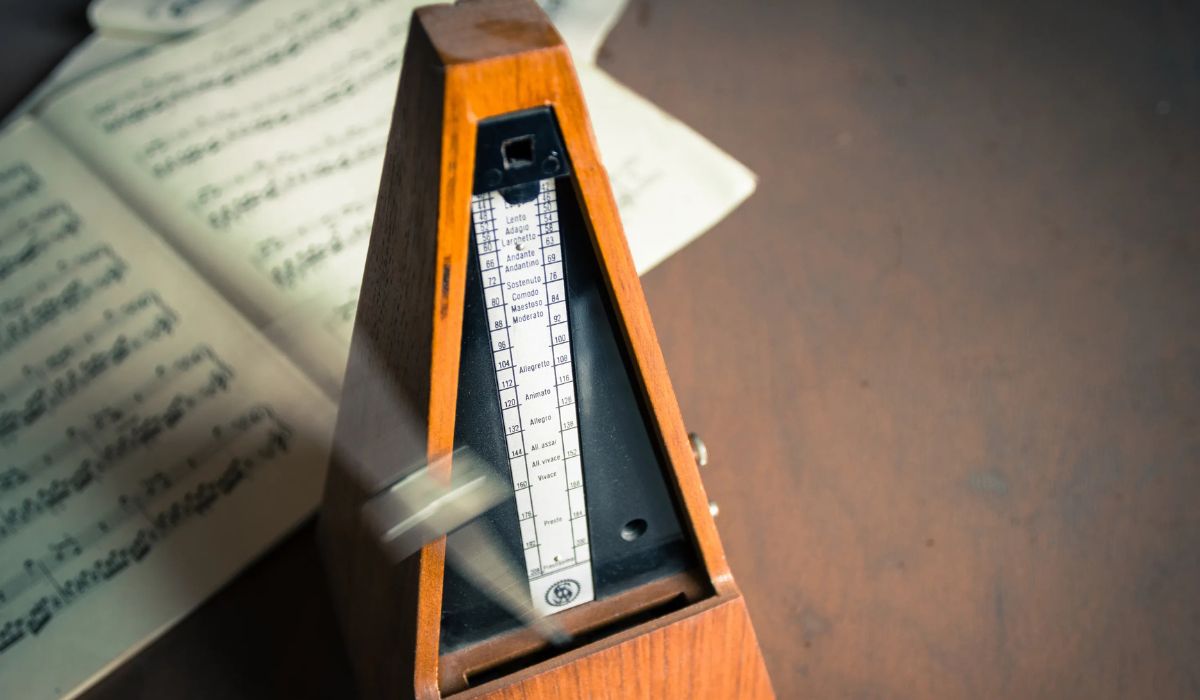
A metronome is a device that produces a steady beat at a specific tempo. It serves as a guide to help you develop a strong sense of rhythm and timing. Practicing with a metronome not only improves your ability to stay in time but also enhances your precision and accuracy in playing various musical elements such as scales, chords, and complex rhythms.
While some guitarists may initially find practicing with a metronome challenging, the benefits it offers far outweigh the initial difficulties. Not only does it help you maintain consistency, but it also allows you to develop speed, precision, and musicality in your playing. Additionally, practicing with a metronome helps you develop good habits and reduces the risk of rushing or dragging during performances.
In this article, we will explore the various benefits of practicing with a metronome and provide you with practical tips for incorporating it into your guitar practice. By the end, you’ll have a clear understanding of how to maximize the benefits of practicing with a metronome, take your playing to the next level, and become a more confident and proficient guitarist.
Benefits of Practicing with a Metronome
Practicing with a metronome offers numerous benefits that can greatly enhance your guitar playing skills. Let’s explore some of the key advantages:
- Improved Rhythmic Accuracy: The metronome serves as a reliable guide, helping you develop a strong sense of rhythm and timing. Regular practice with a metronome hones your ability to play in sync with a steady beat, ensuring that you maintain consistent timing throughout your performance.
- Enhanced Precision and Technique: Playing along with a metronome forces you to pay meticulous attention to your technique. It helps you develop more precise picking, fretting, and hand coordination, allowing you to achieve better articulation and clarity in your playing.
- Developed Sense of Tempo: Working with a metronome gradually improves your ability to internalize and maintain a steady tempo. This is especially crucial when playing with other musicians or in a band, as it helps you stay in sync with the rhythm section and deliver a cohesive and tight performance.
- Improved Speed and Dexterity: Practicing with a metronome is an effective way to build speed and dexterity on the guitar. By gradually increasing the tempo while maintaining accuracy, you can push your technical abilities to new heights, enabling you to play faster and more challenging passages with ease.
- Reduced Tendency to Rush or Drag: One common challenge for guitarists is a tendency to rush or drag during performances. Practicing with a metronome helps you develop a strong internal timekeeping sense, reducing the risk of rushing ahead or lagging behind the beat. This allows for more controlled and balanced playing.
- Increased Musicality: Playing along with a metronome helps you develop a keen sense of musicality. It teaches you how to fit your playing within a rhythmic framework, enabling you to experiment with different phrasing, accents, and dynamics while still maintaining a solid foundation of timing and rhythm.
- Improved Transitions Between Chords and Scales: A metronome can be invaluable for working on smooth transitions between chords and scales. It allows you to practice changing chords or shifting between different scales with precision and timing, enhancing your overall fluidity on the instrument.
By incorporating regular practice with a metronome into your routine, you can reap the benefits of improved rhythmic accuracy, enhanced precision and technique, developed sense of tempo, improved speed and dexterity, reduced rushing or dragging tendencies, increased musicality, and smoother transitions between chords and scales. With these advantages, you’ll undoubtedly see significant progress in your guitar playing abilities.
Setting Up Your Metronome
Before you begin practicing with a metronome, it’s important to properly set it up to suit your needs and playing style. Here are some key steps to follow:
- Selecting the right tempo: Choose a tempo that is appropriate for the exercise or piece you are practicing. Start with a slower tempo to establish a solid foundation and gradually increase the speed as you become more comfortable. Remember, it’s better to start slow and build accuracy than to rush and sacrifice precision.
- Choosing the time signature: Determine the time signature of the music you are playing and set your metronome accordingly. Common time signatures include 4/4 (common time), 3/4 (waltz time), and 6/8 (compound duple time). Make sure the metronome is set to generate the correct number of beats per measure.
- Understanding subdivisions: Some metronomes allow you to set subdivisions, which can be helpful for practicing complex rhythms. Subdivisions divide each beat into smaller note values, such as eighth notes or sixteenth notes. Utilizing subdivisions can improve your sense of timing and help you accurately execute intricate rhythmic patterns.
- Adjusting the volume: Set the volume of your metronome to a level that is audible but not overpowering. It should be loud enough to be heard clearly, yet not so loud that it distracts you from your playing. Listen for a balanced blend between the metronome and your guitar to maintain focus while still having the beat as a steady reference.
- Considering different sounds: Many metronomes offer different sound options. Experiment with various sounds to find one that is pleasing to your ear and sits well within the context of the music you are playing.
- Getting familiar with different metronome features: Explore the features and functions of your specific metronome. Some metronomes have advanced capabilities, such as the ability to program complex rhythmic patterns or to accent specific beats. Familiarize yourself with these features to expand your rhythmic versatility and creativity.
- Using a metronome app: If you prefer practicing with your mobile device, there are several metronome apps available that offer a wide range of features and customization options. These apps often include additional tools such as tuning capabilities and recording features, making them versatile and convenient for practicing guitar.
By taking the time to properly set up your metronome and familiarize yourself with its features, you can ensure a smooth and effective practice session. Remember, the metronome is your reliable guide in developing a strong sense of timing and rhythm, so make sure it is tailored to your specific needs and preferences.
Basic Exercises for Rhythmic Accuracy
Practicing basic exercises with a metronome is an excellent way to improve your rhythmic accuracy and develop a solid foundation in timing. Here are some essential exercises to incorporate into your practice routine:
- Single-Note Exercises: Start by playing a single note on the guitar, such as the 5th fret of the 6th string. Set the metronome to a comfortable tempo and play the note on each beat. Focus on synchronizing your picking or plucking hand with the metronome, ensuring that you strike the note precisely on the beat. Gradually increase the tempo as you become more comfortable, maintaining accuracy and consistency.
- Strumming Exercises: Choose a simple chord progression, such as a G-C-D chord progression. Set the metronome at a tempo that allows you to comfortably strum each chord on the beat. Start by playing the chords with quarter note strums, then progress to eighth note strums, and eventually incorporate different strumming patterns. The key is to maintain a steady rhythm and stay in sync with the metronome throughout the progression.
- Syncopation Exercises: Syncopation is the emphasis or accent placed on weaker beats or off-beat rhythms. Use the metronome to practice accenting certain beats or off-beat notes within a scale or chord progression. This exercise helps you develop a sense of groove and adds rhythmic interest to your playing.
- Rhythm Patterns: Create rhythm patterns using different note durations, such as whole notes, half notes, quarter notes, and eighth notes. Set the metronome to an appropriate tempo and play the patterns while keeping in time with the beat. This exercise helps you internalize different rhythms and improves your overall rhythmic versatility.
- Subdivision Exercises: Set the metronome to a comfortable tempo and practice playing different subdivisions of the beat. Start with eighth notes, then move on to triplets or sixteenth notes. Focusing on subdivisions helps sharpen your sense of timing and allows you to execute more intricate rhythms with precision.
As you practice these exercises with a metronome, pay attention to your accuracy, timing, and consistency. It’s important to strike a balance between playing in time with the metronome and maintaining good technique. Start at a slow tempo and gradually increase the speed as you become more comfortable. Remember, the goal is to develop a strong sense of rhythm and timing to enhance your overall musicality on the guitar.
Applying the Metronome to Scale Practice
Practicing scales with a metronome is a highly effective way to improve your technique, finger dexterity, and timing. By integrating the metronome into your scale practice routine, you can develop a solid foundation in scale playing and enhance your overall musicality. Here’s how to apply the metronome to scale practice:
- Choose a scale: Select a scale that you want to work on, such as the major scale, minor scale, or a specific mode. It’s helpful to focus on one scale at a time to ensure clarity and mastery before moving on to another.
- Determine the tempo: Set the metronome to a tempo that allows you to comfortably play the scale with precision and accuracy. Start at a slower tempo and gradually increase the speed as you become more proficient. It’s important to find a balance where you can maintain consistency while still challenging yourself.
- Begin with quarter notes: Start by playing the scale using only quarter notes. Each note should align with a metronome click. Focus on keeping a steady pace and playing each note evenly.
- Advance to eighth notes and beyond: Once you feel comfortable playing the scale with quarter notes, progress to eighth notes, triplets, and sixteenth notes. As the tempo increases, ensure that each note is played accurately in relation to the metronome beat. This will help you develop speed, agility, and precision in your scale playing.
- Practice different rhythms: Mix up the rhythm of the scale by incorporating various rhythmic patterns. This can include playing the scale with accents on certain beats, syncopating the rhythm, or introducing ties and rests. Experimenting with different rhythms enhances your ability to groove and adds musicality to your scale playing.
- Experiment with dynamics: Don’t be afraid to explore different dynamics while playing the scale with the metronome. Experiment with playing certain notes louder (forte) and others softer (piano). This adds an expressive element to your scale practice and helps you develop control over your playing dynamics.
- Incorporate scale sequences: Take your scale practice to the next level by incorporating scale sequences, such as playing the scale in thirds, fourths, or through different intervals. Use the metronome to maintain a consistent pace as you navigate through these sequences, challenging your finger coordination, and expanding your technical abilities.
Remember, the goal of practicing scales with a metronome is to develop precision, speed, and musicality. Focus on accuracy and timing, ensuring that each note aligns perfectly with the metronome beat. Consistency and gradual progression will lead to significant improvement in your scale playing skills over time. Enjoy the process and have fun exploring the possibilities that the metronome brings to your scale practice!
Incorporating the Metronome into Chord Progressions
Using a metronome to practice chord progressions is an excellent way to improve your rhythm, timing, and chord changes. By integrating the metronome into your chord practice routine, you can enhance your ability to play chords smoothly and in time with a steady beat. Here’s how to incorporate the metronome into your chord progressions:
- Select a chord progression: Choose a chord progression that you want to work on. It could be a simple progression like G – C – D or a more complex sequence. Make sure the progression suits your skill level and allows plenty of room for repetition and practice.
- Determine the tempo: Set the metronome to a tempo that allows you to comfortably transition between chords while staying in time. Start at a slower tempo and gradually increase the speed as you become more proficient. The goal is to maintain a steady pace and play the chords smoothly and accurately.
- Start with basic strumming: Begin by strumming each chord on the beat. Each strum should coincide with a metronome click. Focus on keeping a consistent rhythm and ensuring that each chord change occurs precisely on the beat.
- Advance to more complex patterns: Once you feel comfortable with basic strumming, experiment with different strumming patterns and rhythms. You can incorporate downstrokes, upstrokes, palm muting, or arpeggiation to add variety and musicality to your chord progressions. The metronome helps you maintain a consistent tempo and stay in sync with the beat.
- Practice smooth transitions: Pay close attention to the transitions between chords. Use the metronome to improve your chord changes by ensuring that each transition happens precisely on the beat. Focus on minimizing pauses or hesitations between chords, gradually enhancing the fluidity of your playing.
- Experiment with different voicings: Explore different voicings or inversions of the chords within the progression. This not only adds variety to your playing but also challenges your finger dexterity and coordination. Use the metronome to maintain a consistent tempo as you explore different chord voicings.
- Create rhythmic variations: Once you are comfortable with the basic chord progression, try experimenting with rhythmic variations. This can involve adding syncopation, accents, or different strumming patterns to the progression. The metronome helps you stay grounded and provides a consistent reference point as you incorporate these variations.
As you practice chord progressions with a metronome, focus on accuracy, timing, and smooth chord changes. The metronome serves as a steady guide, helping you develop a strong sense of rhythm and ensuring that your chord playing remains in time. Remember to start at a manageable tempo and gradually increase the speed as you become more comfortable. With consistent practice, you’ll notice significant improvements in your chord playing skills and overall musicality on the guitar.
Developing Speed and Precision with the Metronome
One of the key benefits of practicing with a metronome is the ability to develop speed and precision in your playing. By incorporating the metronome into your practice routine, you can gradually push your technical abilities and improve your overall proficiency on the guitar. Here are some effective strategies for developing speed and precision with the metronome:
- Start with a comfortable tempo: Set the metronome to a tempo where you can comfortably play a specific exercise or passage. It’s essential to establish a solid foundation before increasing the speed.
- Focus on accuracy: Play the exercise or passage slowly and pay close attention to accuracy. Ensure that each note is played precisely on the beat and that your finger placements and picking techniques are correct. Accuracy is crucial in developing speed and precision.
- Gradually increase the tempo: Once you feel comfortable and accurate at a particular tempo, gradually increase the speed of the metronome. Practice the exercise or passage at the new tempo until you feel confident and consistent.
- Practice in short bursts: Use a technique known as “burst practicing” to target specific sections of an exercise or passage. Set the metronome to a faster tempo and practice the challenging section for a short duration, such as 10 to 15 seconds. Rest for a few seconds and repeat. This approach helps build muscle memory and gradually improves your speed and precision over time.
- Focus on clean transitions: Pay attention to the transitions between notes or chords. Use the metronome to ensure that each transition is smooth and clear, without any hesitations. Work on these transitions at a slower tempo if needed, gradually increasing the speed as your dexterity improves.
- Use alternate picking: If applicable to the exercise or passage, incorporate alternate picking to improve speed and precision. Practice playing the notes in an up-down-up-down pattern, syncing your picking hand with the metronome beat. Focus on maintaining consistent picking technique and alignment.
- Experiment with different subdivisions: Set the metronome to different subdivisions, such as eighth notes or sixteenth notes. Practice the exercise or passage with these subdivisions to improve your ability to play fast and accurately within a given rhythm.
- Practicing with a metronome app: Consider utilizing metronome apps that offer features like gradual tempo increase, customizable time signatures, and subdivisions. These apps can provide you with more flexibility in your practice, allowing you to fine-tune your speed and precision workout.
- Record and analyze: Record your practice sessions and listen back to identify areas for improvement. Pay attention to any inconsistencies or rhythmic issues. Analyze your recordings and make necessary adjustments to enhance your speed and precision.
Remember, developing speed and precision takes time and patience. It is important to start with a comfortable tempo, focus on accuracy, and gradually increase the speed. Regular practice with a metronome will help build muscle memory and improve your overall efficiency on the guitar. Stay consistent, be diligent, and enjoy the journey of becoming a faster and more precise guitarist.
Practicing Different Time Signatures with the Metronome
Practicing with a metronome is not limited to the standard 4/4 time signature. Incorporating different time signatures into your practice routine can expand your rhythmic vocabulary and improve your overall musicianship. Here’s how you can use the metronome to practice different time signatures:
- Understanding time signatures: Familiarize yourself with different time signatures and their corresponding beats and subdivisions. Common time signatures include 3/4 (waltz time), 6/8 (compound duple time), 7/8, and 5/4, among others. Understand the number of beats per measure and the duration of each beat.
- Setting the metronome: Adjust the metronome to the desired tempo and time signature. Make sure the metronome is set to generate the correct number of beats per measure. For example, in 3/4 time, it should produce three beats per measure.
- Playing simple exercises: Start by playing simple exercises or repeating patterns in the chosen time signature. Begin with quarter notes to establish a steady rhythm and get accustomed to the feel of the time signature. Focus on maintaining a consistent tempo and playing in sync with the metronome’s beats.
- Exploring subdivisions: Experiment with different subdivisions within the chosen time signature. For example, in 3/4 time, practice playing using eighth notes, triplets, or sixteenth notes. This helps improve your internal sense of time and enhances your ability to play complex rhythms within the given time signature.
- Practicing accents: Use the metronome to emphasize specific beats within the time signature. For instance, in 7/8 time, you can accent the first beat of each measure or play with an accent pattern such as long-short-short. This exercise helps refine your sense of phrasing and adds musicality to your playing.
- Playing chord progressions: Apply the metronome to chord progressions in different time signatures. This helps develop your ability to change chords smoothly and accurately within the given rhythm. Start with simple progressions and gradually progress to more complex sequences.
- Creating your own compositions: Utilize the metronome to experiment and compose your own music in different time signatures. Let your creativity flow and explore the possibilities of different rhythmic patterns and grooves. This exercise sharpens your understanding of time signatures and encourages you to think outside the box.
- Working with odd time signatures: Challenge yourself by practicing in odd time signatures such as 5/4 or 7/8. Focus on internalizing the unique feel of these time signatures through consistent practice with the metronome. This strengthens your rhythmic versatility and expands your comfort zone as a guitarist.
By incorporating different time signatures into your practice routine with the metronome, you develop a deeper understanding of rhythm and expand your ability to play in various musical contexts. The metronome serves as a reliable guide, helping you stay in time and maintain a steady tempo. Embrace the challenge of different time signatures and watch as your sense of rhythm and musicality thrive.
Advanced Techniques for Musicality with the Metronome
While the metronome is primarily known for its role in developing timing and precision, it can also be a valuable tool for enhancing your musicality. By incorporating advanced techniques into your practice routine, you can use the metronome to explore various aspects of musical expression. Here are some advanced techniques to elevate your musicality with the metronome:
- Practice dynamics: Experiment with playing softer (piano) and louder (forte) passages within the context of the metronome’s steady beat. Practice crescendos, diminuendos, and other dynamic variations to add expressiveness and emotion to your playing.
- Work on phrasing: Use the metronome to focus on shaping your phrases. Play passages with different lengths and dynamics, emphasizing certain notes or creating subtle pauses. This technique enhances the musicality and gives your playing a sense of fluidity and expression.
- Explore rubato: Rubato is a technique where you temporarily deviate from the strict tempo to add expressiveness and emotion. Using the metronome as a guide, practice playing certain sections slightly ahead or behind the beat to create a sense of freedom and flexibility in your interpretation.
- Add ornamentation: Experiment with embellishing your melodies or chords by adding ornaments such as trills, slides, hammer-ons, and pull-offs. Incorporate these ornamentations into your playing while keeping a steady tempo with the metronome.
- Practice rhythmic displacement: Rhythmic displacement involves shifting the rhythmic emphasis within a passage or phrase. Use the metronome to practice playing a phrase starting on different beats or subdividing the beats with different rhythms. This technique adds interest and complexity to your playing.
- Improvise over backing tracks: Utilize the metronome to improvise over different backing tracks. Play along with the metronome’s beat, but experiment with different scales, modes, and melodic ideas to create your own unique musical statements. This encourages your creativity and improvisational skills.
- Work on syncopation and off-beat rhythms: Use the metronome to practice syncopation and off-beat rhythms. Emphasize the weak beats or play notes slightly before or after the beat to create a sense of groove and tension in your playing.
- Experiment with different tempos: Explore different tempos beyond the usual moderate range. Practice playing at very slow tempos to focus on phrasing and subtleties, or challenge yourself with faster tempos to develop your technical abilities and precision. The metronome helps you maintain a steady tempo at any speed.
By incorporating these advanced techniques into your practice with the metronome, you can elevate your musicality and bring a greater expressive element to your playing. The metronome serves as a constant reference point, keeping you grounded while allowing the freedom to explore different facets of musical expression. Embrace these techniques, unleash your creativity, and let the metronome guide you on a journey of musical exploration.
Conclusion
Practicing with a metronome is a powerful method for improving your guitar playing skills and enhancing your overall musicality. The benefits of incorporating a metronome into your practice routine are undeniable – from developing rhythm and timing to increasing speed, precision, and musical expression.
By setting up your metronome properly and understanding its features, you can tailor your practice sessions to meet your specific needs and goals. Whether you’re practicing basic exercises, scales, chord progressions, or exploring different time signatures, the metronome serves as an invaluable guide, keeping you in sync and helping you improve your playing accuracy and consistency.
As you progress with the metronome, you’ll find yourself gaining more control over your technique, developing stronger finger coordination, and deepening your understanding of rhythm. The metronome enables you to push your own limits, gradually increasing the tempo and building speed without sacrificing accuracy or musicality.
In addition to technical development, the metronome also fosters a greater sense of musical expression. By experimenting with dynamics, phrasing, rubato, and other advanced techniques, you can elevate your playing to a higher level of musicality and captivate your audience with nuanced performances.
Remember that practicing with the metronome requires patience and consistency. Start at a comfortable tempo, focus on accuracy, and gradually incrementally work your way up as your skills improve. Celebrate your progress along the way and enjoy the process of refining and expanding your musical abilities.
In conclusion, the metronome is a reliable companion that can guide and inspire you to reach new heights as a guitarist. Embrace its benefits, incorporate it into your practice routine, and witness the transformation in your playing. Let the metronome be your ally on the journey to becoming a more skilled, confident, and expressive musician.